



How the Meeting Became “The Work” — and What We Can Do About It
How the Meeting Became “The Work” — and What We Can Do About It
I remember thinking, as a young man just starting out in my career, that one day—when I became a “big boss”—I would finally control my own time.
Oh, how naïve I was.
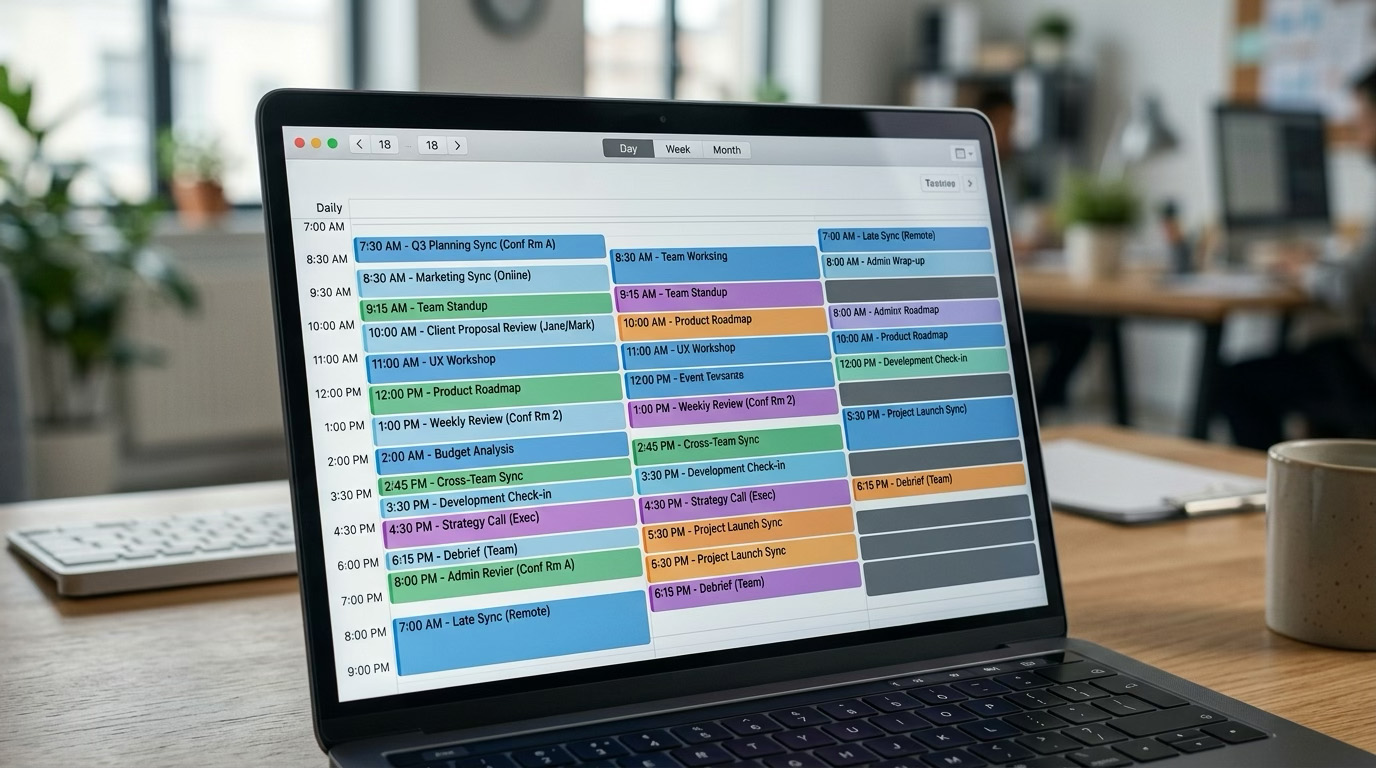
The more senior the positions I held, the less time I seemed to have for reflection, analysis, and learning. My calendar filled up relentlessly. From eight o’clock on Monday morning until early evening on Friday, my days were booked in a continuous flow of meetings. The actual work—the thinking, deciding, learning, and improving—was pushed into evenings and weekends.
The meetings were supposed to enable the work.
Instead, they became the work.
For a long time, I assumed this was simply the price of responsibility. Leadership meant availability. Seniority meant full calendars. But a growing body of research suggests that this experience is no longer exceptional. Increasingly, managers and professionals are experiencing what is now commonly referred to as meeting overload: a work environment where the sheer volume of meetings contributes to stress, undermines motivation, and ultimately hampers productivity.
I was reminded of this recently during a leadership training session with a group of highly experienced managers. At one point, I suggested that they should plan their schedules to allow for roughly eight hours each week of unbooked time—time for reflection, spontaneous conversations with colleagues or employees, or simply reading and thinking.
As I spoke, I noticed that two participants had tears in their eyes.
For them, the idea of having eight unbooked hours in their calendars was not a practical suggestion. It was a utopian fantasy—something with no apparent connection to their actual working lives.
That moment captured a fundamental paradox of modern working life:
Meetings were designed to coordinate work. In many organizations, they have replaced it.
When the Solution Becomes the Problem
For years now, there has been no shortage of books, courses, and tools focused on creating better meetings. And rightly so—many meetings are poorly designed and badly facilitated, and there is plenty of room for improvement.
But this focus on meeting quality risks missing a more fundamental question:
Should this be a meeting at all?
Before we ask how to improve meetings, we need to ask why so many tasks, decisions, and conversations default to meeting form in the first place.
Meetings Are Valuable — But Only for Certain Kinds of Work
Let me be clear: this is not an argument against meetings.
Meetings are an essential part of organizational life when they are used for the right purposes. They are particularly valuable when:
- Realtime dialogue is necessary
- Decisions require joint sensemaking
- Conflict, ambiguity, or trust must be handled live
When people need to interpret complex information together, challenge assumptions, or build shared understanding, synchronous conversation matters. In these situations, a welldesigned meeting can save time rather than waste it.
The problem arises when meetings become a universal solution to every coordination challenge.
Routine updates, simple information sharing, individual thinking, and straightforward decisions are often pulled into meeting formats—not because they require them, but because meetings have become the default mode of working.
The problem is not meetings.
The problem is using meetings as a universal solution to every coordination problem.
Why Meetings Are Overused: The Hidden Drivers
To understand how meetings came to dominate working life, we need to look beyond individual behavior and examine the system that produces it.
1. Low Friction, High Habit
Modern calendar and collaboration tools have made meetings incredibly easy to schedule. With a few clicks, time can be claimed from multiple people at once. The immediate cost feels low—just another half hour.
The real cost, however, is cumulative and distributed: fragmented attention, lost focus, delayed decisions, and postponed execution. When meetings are cheap to create but expensive to attend, overuse is almost inevitable.
2. Visibility, Safety, and “Meeting FOMO”
Many people attend meetings not because their contribution is essential, but because absence feels risky. Being present signals engagement, commitment, and relevance. Being absent can feel like opting out—or worse, becoming invisible.
In this way, meetings become entangled with psychological safety and professional identity. Presence is mistaken for contribution. Attendance becomes a proxy for value.
3. Meetings as Management Substitutes
Perhaps most importantly, meetings are often used to compensate for missing structure elsewhere. They frequently serve to:
- Compensate for unclear goals
- Replace weak or ambiguous decision rights
- Avoid the discipline of written thinking
When responsibilities are unclear, decisions unresolved, or priorities poorly articulated, meetings become a holding pattern. They create the appearance of progress while postponing real commitment.
From a changemanagement perspective, this is familiar territory: behavior often compensates for structural gaps. Meetings are no exception.
The Real Cost: What Meetings Crowd Out
The most damaging effect of meeting overload is not what happens in meetings, but what can no longer happen outside them.
As meetings expand, time for focused, uninterrupted work shrinks. Thinking, learning, preparing, and improving are squeezed into the margins of the day—early mornings, late evenings, and weekends. In my consulting work, I often find myself having meetings to prepare for other meetings, and meetings to follow up on those meetings, in a seemingly neverending stream. And yet, when it comes to actually doing the work, no one in the organization has the time to get it done.
When meetings dominate peak energy hours, focus does not disappear. It is displaced.
When meetings expand, focus doesn’t vanish—it gets pushed into the shadows of the workday.
Over time, this erodes both performance and wellbeing. People feel busy but ineffective. Activity increases while progress slows.
Other Ways of Working: Expanding the Repertoire
The alternative to meeting overload is not fewer conversations—it is more intentional ways of working.
Highperforming organizations do not eliminate meetings. They complement them with other modes of coordination.
1. Asynchronous Updates Instead of Status Meetings
Many status meetings exist solely to share information. These can often be replaced by written weekly updates, shared dashboards, or short recorded briefings. This allows people to absorb information when it suits them and preserves synchronous time for discussion that actually requires it.
2. Written Thinking Instead of Verbal Processing
Writing forces clarity. Decision memos, onepage problem statements, and welldesigned prereads reduce the need to “think out loud” in large groups. Counterintuitively, this often improves the quality of both decisions and discussions—when meetings do occur, they start from a higher level.
3. Small, Focused Working Sessions Instead of Large Meetings
Not every issue needs a room full of people. Many problems are best handled by two or three people, with a clearly defined output and a strict time box. Smaller working sessions reduce fragmentation and speed up coordination—especially at senior levels.
4. Clear Decision Rules Instead of Endless Discussion
Many meetings exist because no one is quite sure who decides, on what basis, and with which input. When decision rights are explicit, entire categories of meetings disappear. Discussion gives way to execution.
5. Explicit “NoMeeting” Work Modes
Finally, organizations can make focus visible and legitimate by designating focus blocks, meetingfree mornings or days, or protected deepwork windows. This sends a powerful signal: thinking and execution are not what happens after meetings. They are core work.
Reframing the Role of the Meeting
The most important shift is conceptual.
Meetings should be treated like a specialist tool—not a default setting.
Or, put more bluntly:
The meeting is one way of working. It is not the work.
For leaders, this raises a set of uncomfortable but necessary questions:
- What types of work genuinely require a meeting?
- What types of work are delayed by them?
- What would happen if meetings had to earn their place in the calendar?
Answering those questions may be one of the most effective—and least discussed—productivity interventions available today.
References:
Whillans et al. (2021), The Psychology Behind Meeting Overload, HBR
Laker et al. (2022), Dear Manager, You’re Holding Too Many Meetings, HBR
Hinds & Sutton (2022), Meeting Overload Is a Fixable Problem, HBR
Microsoft (2025), Work Trend Index: Breaking Down the Infinite Workday


About Post Author
